2025 Year-in-Review: SEVEN transformative accomplishments you helped make possible
By: KELLI ROSS METZ
As 2025 comes to a close, we’re reflecting on the incredible strides we’ve made together toward building a fairer and more effective criminal legal system. Thanks to your partnership, lives have been changed for the better, and justice has been advanced in meaningful ways.
Here are SEVEN transformative accomplishments you helped make possible this year:
1. Charleston, SC, Screening Process Shows Gold Standard Success
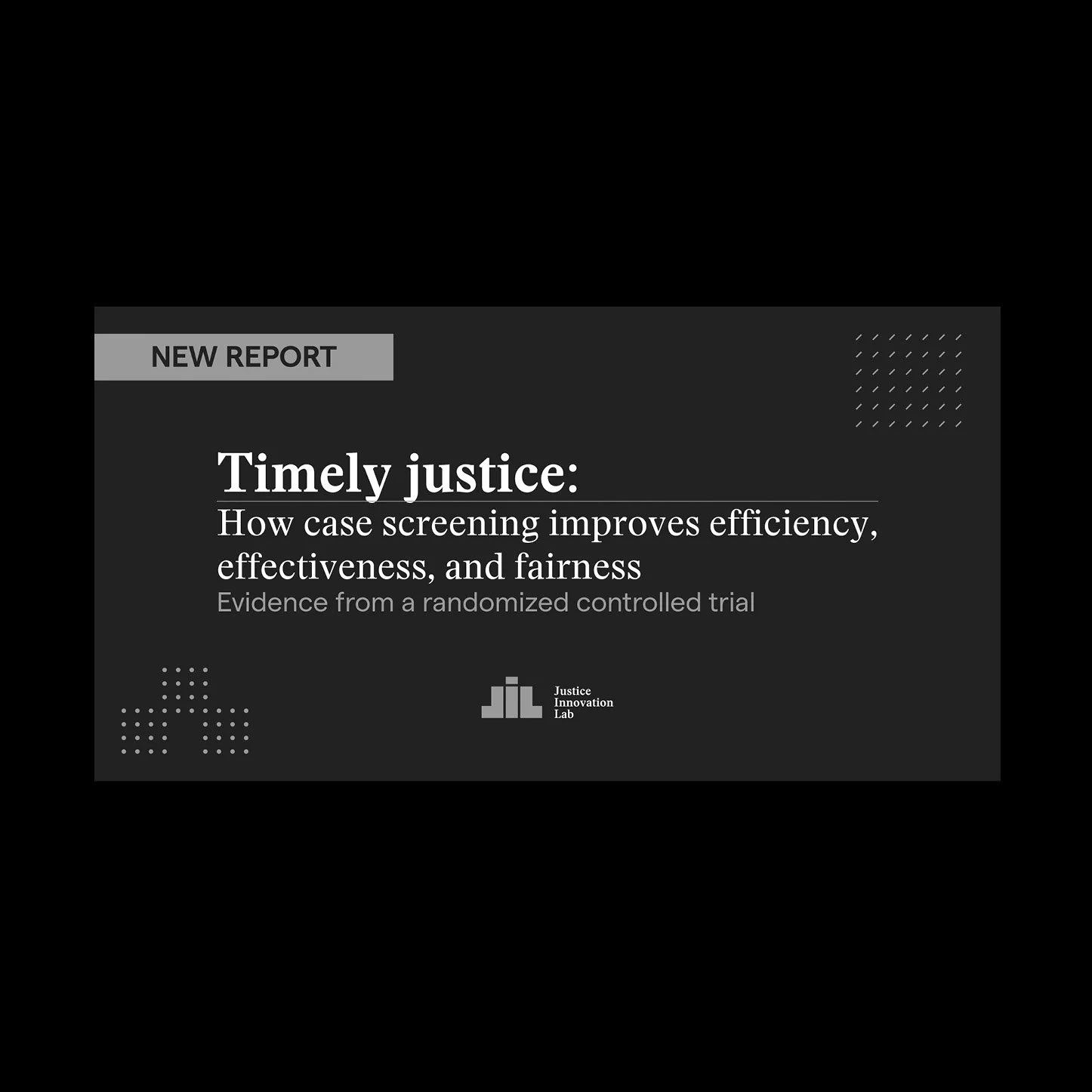
In June, JIL released the results of the first randomized controlled trial (RCT) in the United States examining prosecutorial intake practices. The findings show that early case screening for low-level offenses can significantly reduce system inefficiencies, save public funds, and minimize harm to individuals—without compromising public safety.
The RCT in Charleston County, SC, evaluated the impact of assigning two part-time screening attorneys to assess certain misdemeanor and low-level felony cases within 30 days of arrest. This approach, which is shockingly absent in many cities and counties, allowed prosecutors to remove legally insufficient cases earlier in the process rather than letting them linger in the system for months or years. Read more.
Key Findings Included:
Prosecutors dismissed inadequate cases on average 150 days faster than through standard business processes, reducing system burdens and giving arrestees and victims answers sooner.
224 cases removed from the system, impacting 221 people, and saving the courts, public defenders, and jails significant resources.
The new process saved Charleston County over $400,000 in jail, defense, and court costs, over 3 times the cost of the staffing changes required.
Read Jared Fishman and Rory Pulvino’s commentary here.
Read Charleston’s Post and Courier’s editorial here.
2. Six jurisdictions pitch solutions at Justice Innovation Accelerator
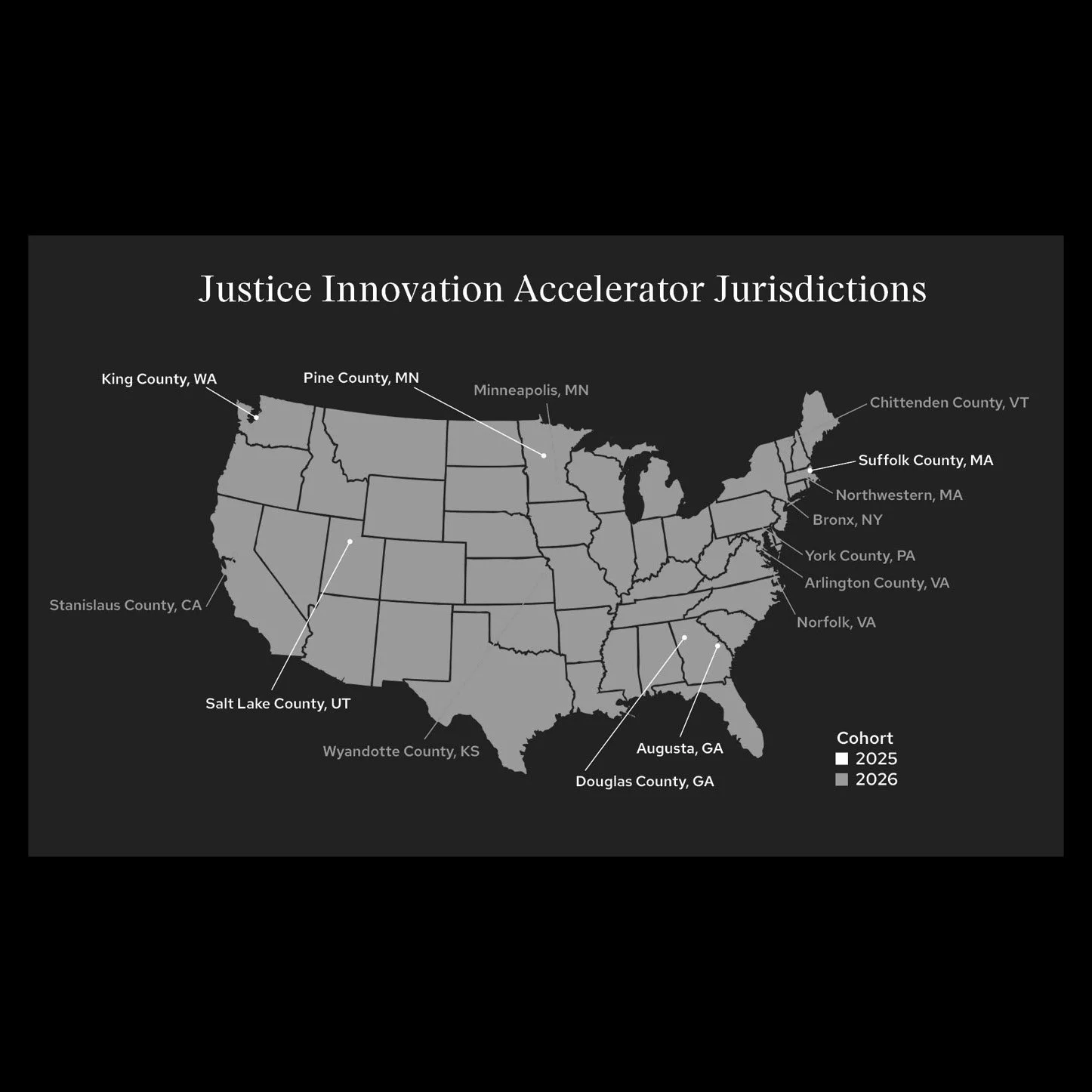
When criminal justice leaders from six jurisdictions gathered at Vanderbilt University Law School in mid-October, they brought with them a particular problem that had plagued their communities for years: cases dragging on indefinitely; courts overwhelmed by mental health and substance abuse cases; unsustainable jail populations; and crime victims feeling invisible in a system meant to serve them. Three days later, they left with something different: momentum and a concrete plan.
The Justice Innovation Accelerator, hosted by Justice Innovation Lab, Vanderbilt Project on Prosecution Policy (VPOPP), and Prosecution Leaders of Now, brought together prosecutors, law enforcement officers, victim advocates, crisis counselors, judges, and county commissioners from Boston, Seattle, Salt Lake City, Augusta and Douglas County in Georgia, and Pine County, MN.
Their mission? To stop talking about what's broken and start designing a solution.
“[The Accelerator was] equal parts inspiring/creative and tangible/practical,” shared Jennifer Mitchell, Deputy District Attorney, Salt Lake County (UT) District Attorney's Office. “I left informed, energized and with practical (and practiced) tools to use moving forward. It has forever changed the way I see problems in the criminal justice system and problems in general.” Read more.
3. Five years of partnership with Charleston, SC
In September, the JIL team returned to Charleston, SC — the birthplace of our first major partnership with the Ninth Circuit Solicitor’s Office — to hold a two-day workshop with the office. Together, we celebrated five years of transformation and charted the next chapter of our work to build a fairer, more effective justice system.
Since 2020, we have:
Conducted deep-dive analyses that revealed the roots of unfair outcomes.
Co-designed a new case intake process that's improving how justice is delivered and saving taxpayers hundreds of thousands of dollars.
Demonstrated how small targeted interventions can have large, positive impacts.
As Solicitor Scarlett Wilson noted after the workshop, “My goal has always been to make the justice system more fair and effective. Working with Justice Innovation Lab has helped us develop strategies geared toward better outcomes for our community.” Read more.
4. Research released on AI as a prosecutor
As prosecutors' offices across the country begin integrating AI into their daily work, JIL, along with researchers from Stanford Law and Michigan Law, conducted an experiment by asking ChatGPT: What happens when AI acts as a prosecutor? Our findings are detailed in the "AI thinks you should go to jail, even if you didn't do the crime" report.
The results? When tested on real police reports, ChatGPT recommended prosecution in the overwhelming majority of cases—even when evidence was weak, criminal elements were missing, or searches were potentially illegal.
These tools learn from historically biased data, can generate false information, and cannot be cross-examined like human witnesses—yet they're already influencing decisions about who gets charged and incarcerated. This research underscores an urgent need for transparency, rigorous testing, and meaningful human oversight before AI becomes further embedded in our criminal legal system. Read more.
5. Demonstrated success of evidence-driven changes spark a ripple effect
This year, we witnessed jurisdictions, including Hennepin County, MN, and the Chicago Police Department, learned about our approach and traffic stop policy research with Ramsey County, MN, and then incorporated similar policy changes without our direct intervention. Read more.
6. Featured speaker at Penn State, Marshall University, and Vanderbilt Law
In April, JIL Founder and Executive Director Jared Fishman was a keynote speaker at Penn State and Marshall University. He presented a talk titled “What does it take to save our communities?” at the Penn State University Forum Speakers Series and was the featured speaker at the Marshall University Amicus Curiae Lecture Series on Constitutional Democracy.
Watch Marshall University here.
In September, Vanderbilt University Law School community members and students gathered to hear Jared and FBI Special Agent Ashley Johnson explore the urgent issues of police accountability and civil rights prosecutions by looking back 20 years to Hurricane Katrina and the murder of Henry Glover. This case was featured in Fire on the Levee: The Murder of Henry Glover and the Search for Justice after Hurricane Katrina.
Watch their conversation here.
7. Presented research at the American Society of Criminology annual meeting
In November, JIL team members presented during the “Prosecutors and Policy Effects: Findings from Four Jurisdictions” panel at the American Society of Criminology annual meeting in Washington, DC. JIL’s Data & Research Scientist Kevin Himberger explained “The Effects of Prosecutorial Screening on the Timing and Disposition of Cases,” while Research Partner J.J. Naddeo shared “The Effects of Reducing Pretextual Stops: Evidence from Saint Paul Minnesota.” Chief Implementation Officer Rory Pulvino moderated the panel.