
Dr. Martin Luther King Jr.
Leader, activist, and minister, 1929–1968
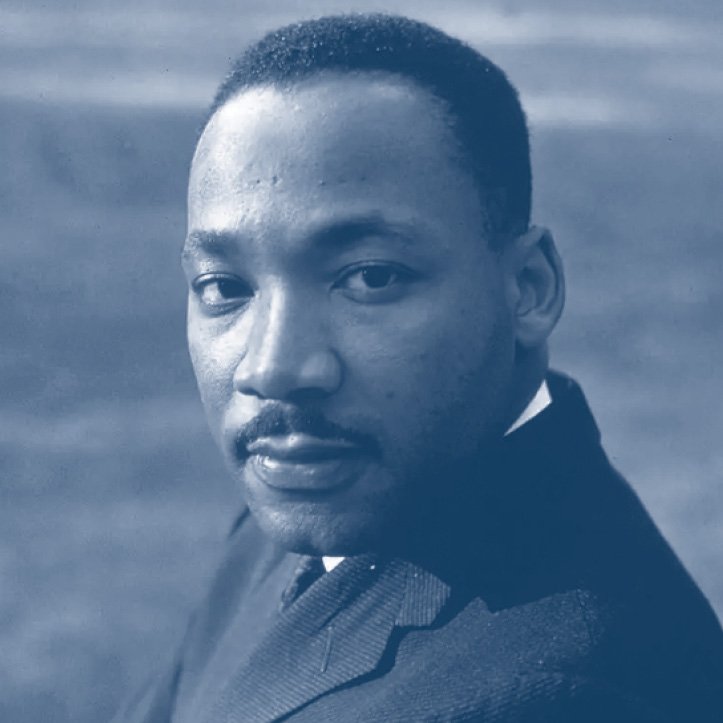

Dr. Martin Luther King Jr., a minister, activist, and Nobel Prize winner, is well-known for his leadership during the Civil Rights Movement. He played a pivotal role in ending segregation as well as in the creation of the Civil Rights Act of 1964 and the Voting Rights Act of 1965.
On February 11, 1961, King addressed a packed audience in the Hall of Fame Playhouse at New York University’s former University Heights Campus in the Bronx. His speech, “The Future of Integration,” focused on the importance of nonviolent protest. He gave this speech at numerous universities starting in 1959. In it, he shared:
“Human progress is neither automatic nor inevitable. Even a superficial look at history reveals that no social advance rolls in on the wheels inevitability. Every step towards the goal of justice requires sacrifice, suffering, and struggle; the tireless exertions and passionate concern of dedicated individuals.”
He emphasizes that progress requires active struggle and effort — it doesn't simply happen with the passage of time. Without dedicated work toward justice, time can actually work against progress.


