Justice Innovation Accelerator
Tackling the most pressing justice challenges by designing innovative solutions
The Justice Innovation Accelerator—where criminal justice leaders design solutions to their jurisdiction’s toughest challenges.
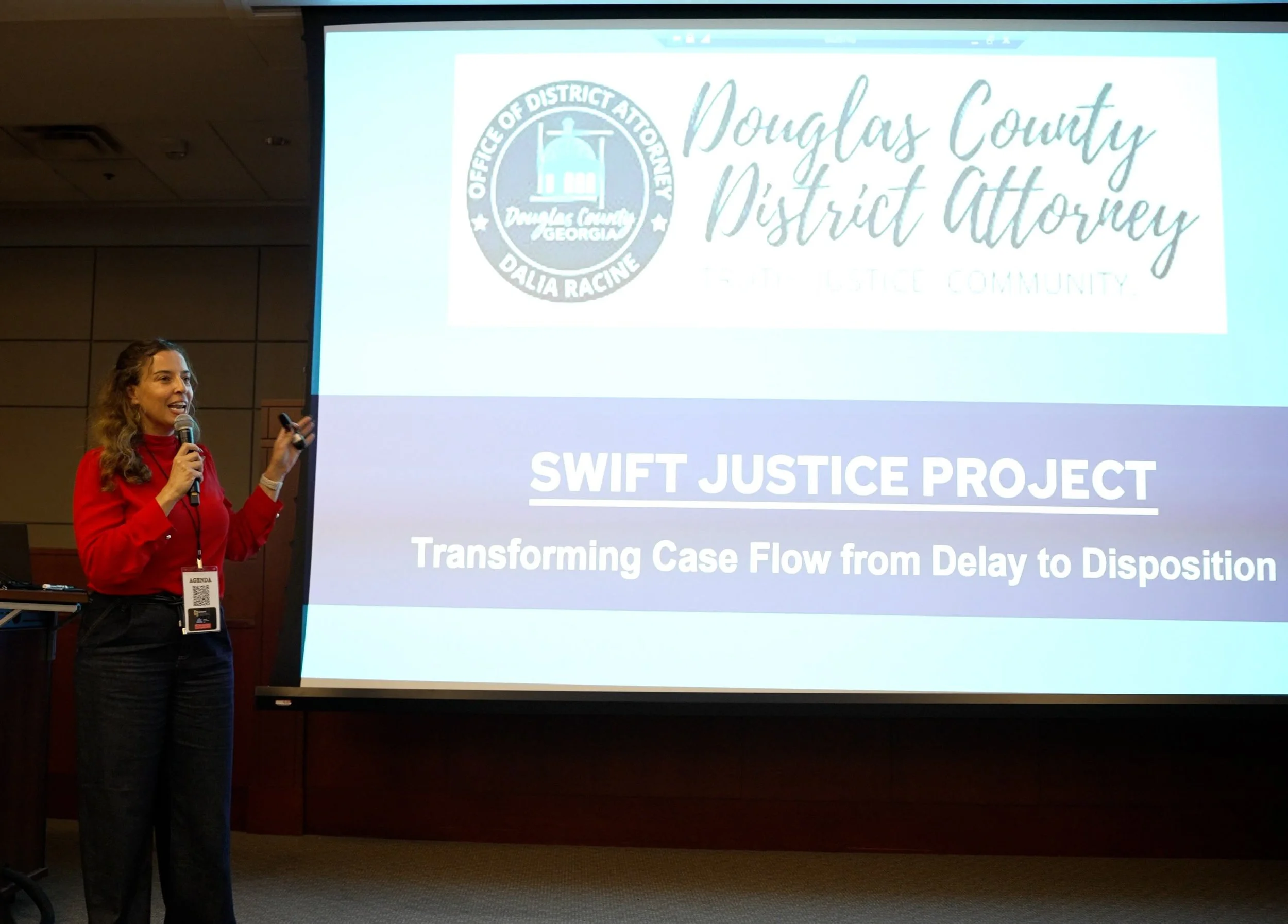
Every system is perfectly designed to get the results it currently gets. In criminal justice systems across the United States, those results are unacceptable — massive taxpayer expenditures, low clearance rates for serious crime, high recidivism, eroded public trust, unnecessary incarceration, and entrenched inequality.
Much of this dysfunction stems from outdated legal architecture. The existing criminal system was not built to handle modern case volumes or the complex social drivers of crime. The result is clogged dockets, increased public disorder, and declining legitimacy. This outdated design generates massive misallocations of scarce resources to the detriment of community safety and justice.
The Justice Innovation Accelerator operates on a simple but powerful premise: if we want different results, we need a different design.
For the biggest downstream returns, the initial emphasis should be on changing front-end system processes.

The Accelerator helps leaders diagnose root causes of dysfunction, build cross-sector partnerships, and test data-informed solutions that improve safety, fairness, and trust.
This 12-month program, which is a partnership between JIL and the Vanderbilt Project on Prosecution Policy (VPOPP), includes virtual sessions, expert coaching, peer learning, a three-day, in-person workshop, and six months of follow up. The Accelerator helps jurisdictions move from problem to insight to pilot solution. Its approach rests on four pillars:
Equip Leaders — Provide justice leaders with diagnostic tools to identify structural problems, not just symptoms.
Enable Collaboration — Bring prosecutors, law enforcement, judges, defense attorneys, advocates, and community organizations together from each jurisdiction to co-create solutions.
Empower Implementation — Support teams in prototyping and testing ideas with real-world data.
Expand the Evidence Base — Build proof points that show what works and can be replicated nationwide.
Accelerator Cohorts
2025
Augusta, GA
Douglas County, GA
King County, WA
Pine County, MN
Suffolk County, MA
Salt Lake County, UT
2026
Arlington, VA
Bronx County, NY
Norfolk, VA
Northwestern District, MA
Stanislaus County, CA
Wyandotte County, KS
York County, PA
Organizers

Jared Fishman
Jared is Founder and Executive Director of Justice Innovation Lab. Prior to founding JIL, he served for 14 years as a federal prosecutor in the U.S. Department of Justice’s Civil Rights Division. Jared led some of America’s most complex civil rights prosecutions, securing convictions in high-profile cases involving police misconduct, hate crimes, and human trafficking. He is the author of Fire on the Levee: the Murder of Henry Glover and the Search for Justice After Hurricane Katrina.
Jared is the co-director of JIL@GW and adjunct faculty at the George Washington University Law School. His work and analysis have been featured on CNN, CBS, CBC, and in The New York Times and The Washington Post. Jared earned his law degree from the George Washington University Law School, and his bachelor’s degree from the University of Pennsylvania.

Alissa Marque Heydari
Alissa is Director of Vanderbilt Project on Prosecution Policy (VPOPP) at Vanderbilt Law School. Prior to joining Vanderbilt, she served as acting director of the Institute for Innovation in Prosecution (IIP) at John Jay College of Criminal Justice, where she launched its Beyond Big Cities program, which successfully engaged prosecutors from around the country in smaller, rural, and conservative jurisdictions. Alissa is a former Assistant District Attorney in New York County (DANY), where she handled hundreds of cases, including violent felonies and homicides. While at DANY, she served as Acting Criminal Court Supervisor and was a member of the Sex Crimes Unit and Elder Abuse Unit.
Alissa is a graduate of the George Washington University Law School and received her undergraduate degree at the University of California, Berkeley. She clerked in the Appellate Division of the Superior Court in New Jersey.

Rory Pulvino
Rory is the Chief Implementation Officer at the Justice Innovation Lab, where he leads a team of data engineers, analysts, and outside researchers in designing data-driven solutions for a more equitable, effective, and fair justice system. Rory is a former data scientist with the Office of the Attorney General for the District of Columbia and the San Francisco District Attorney, where he worked on improving data systems in prosecutor offices and incorporating data into office decision-making.
Rory holds a BS from the University of Oklahoma and a dual JD/MPP from the University of Michigan.
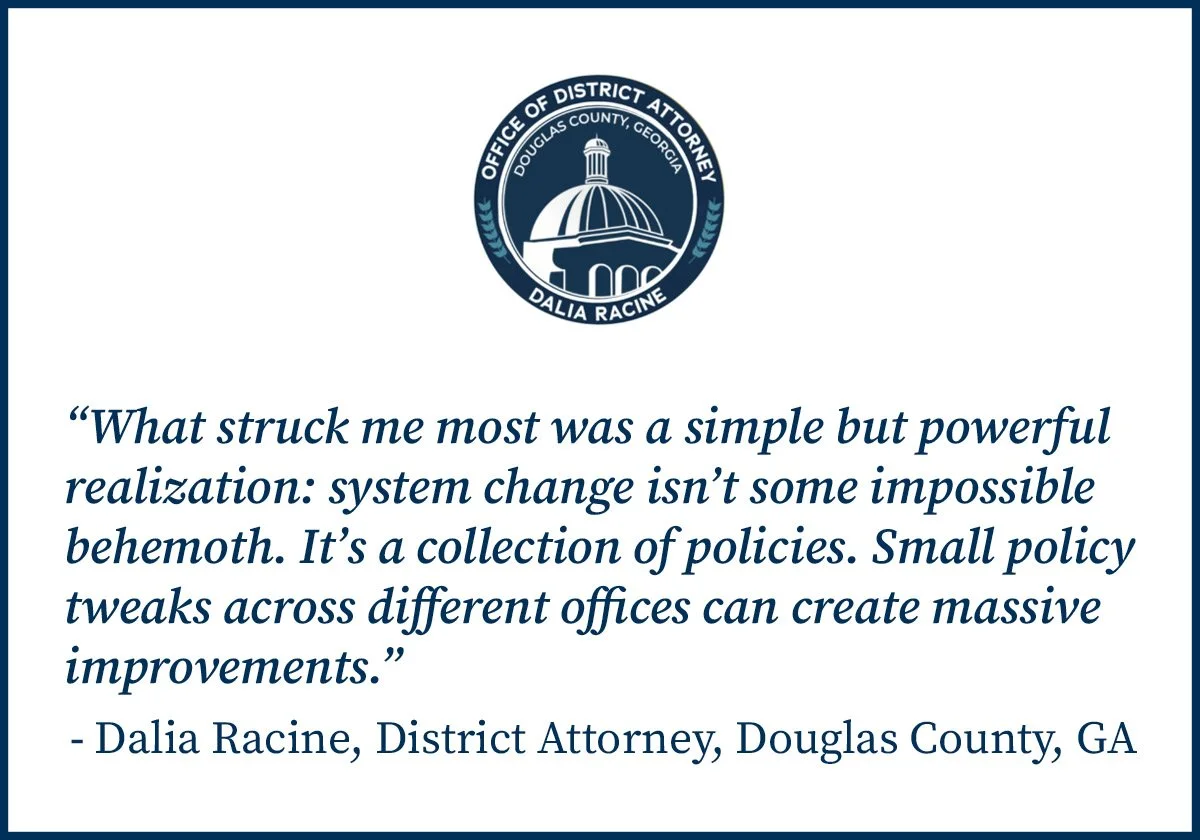
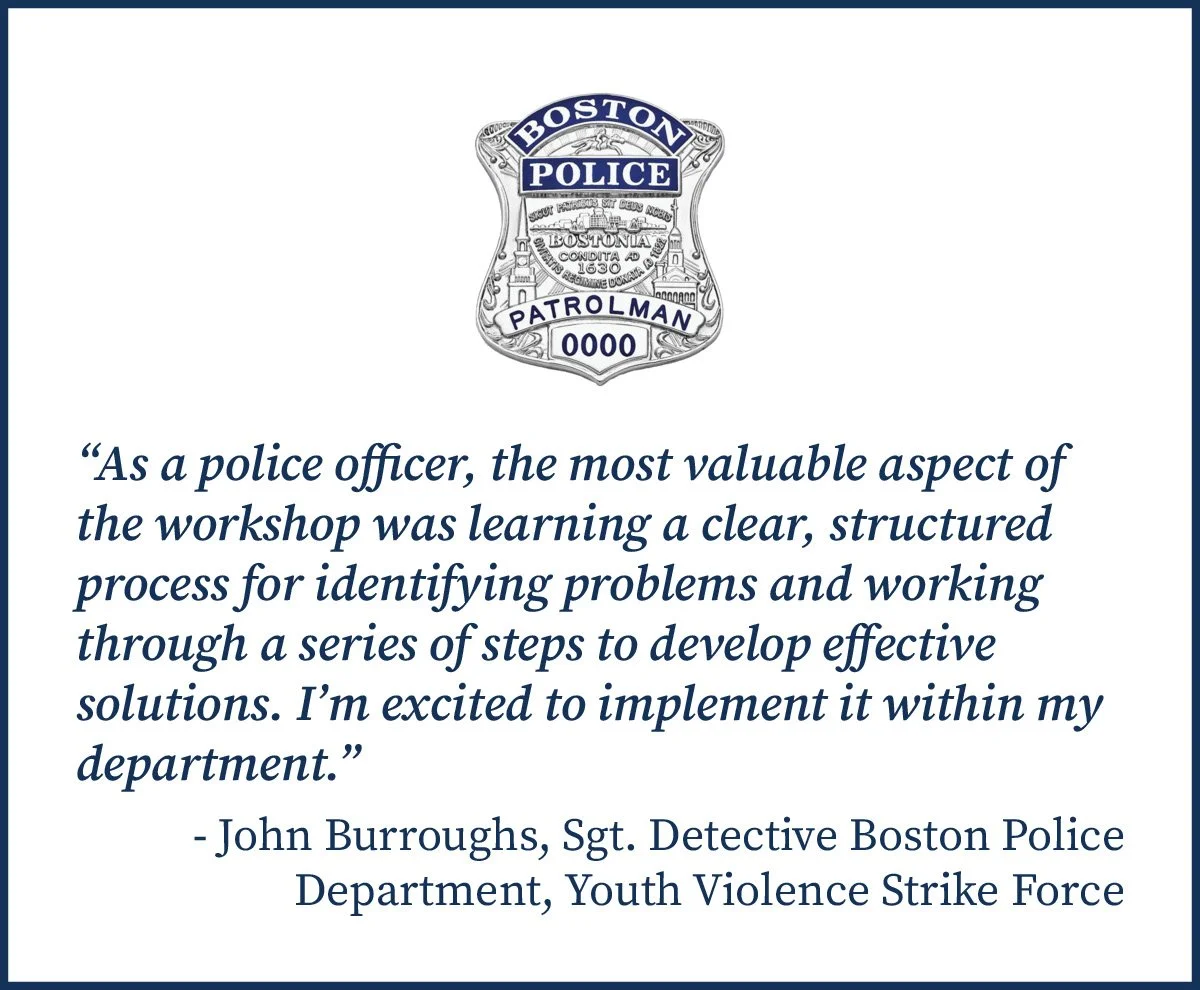
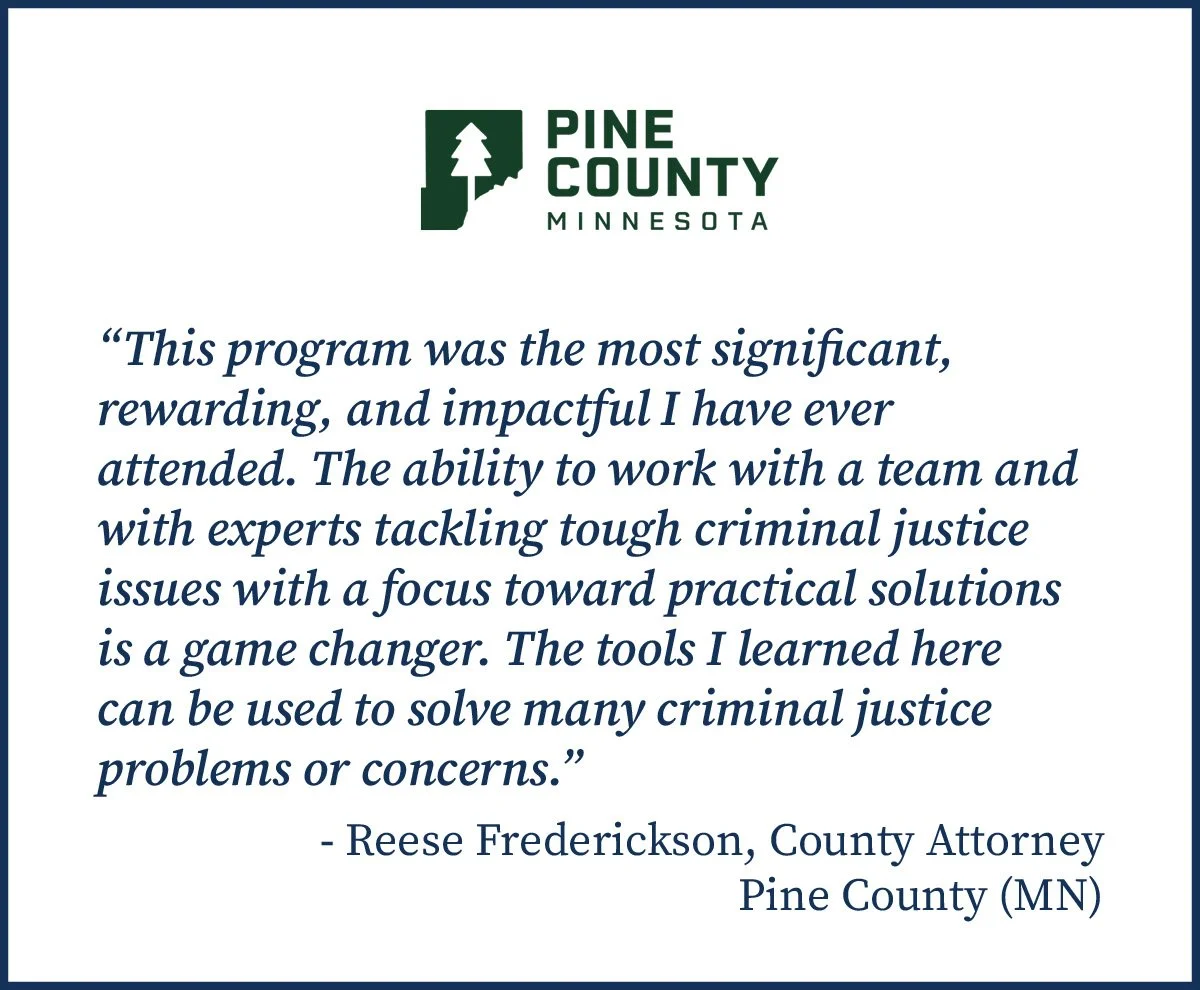
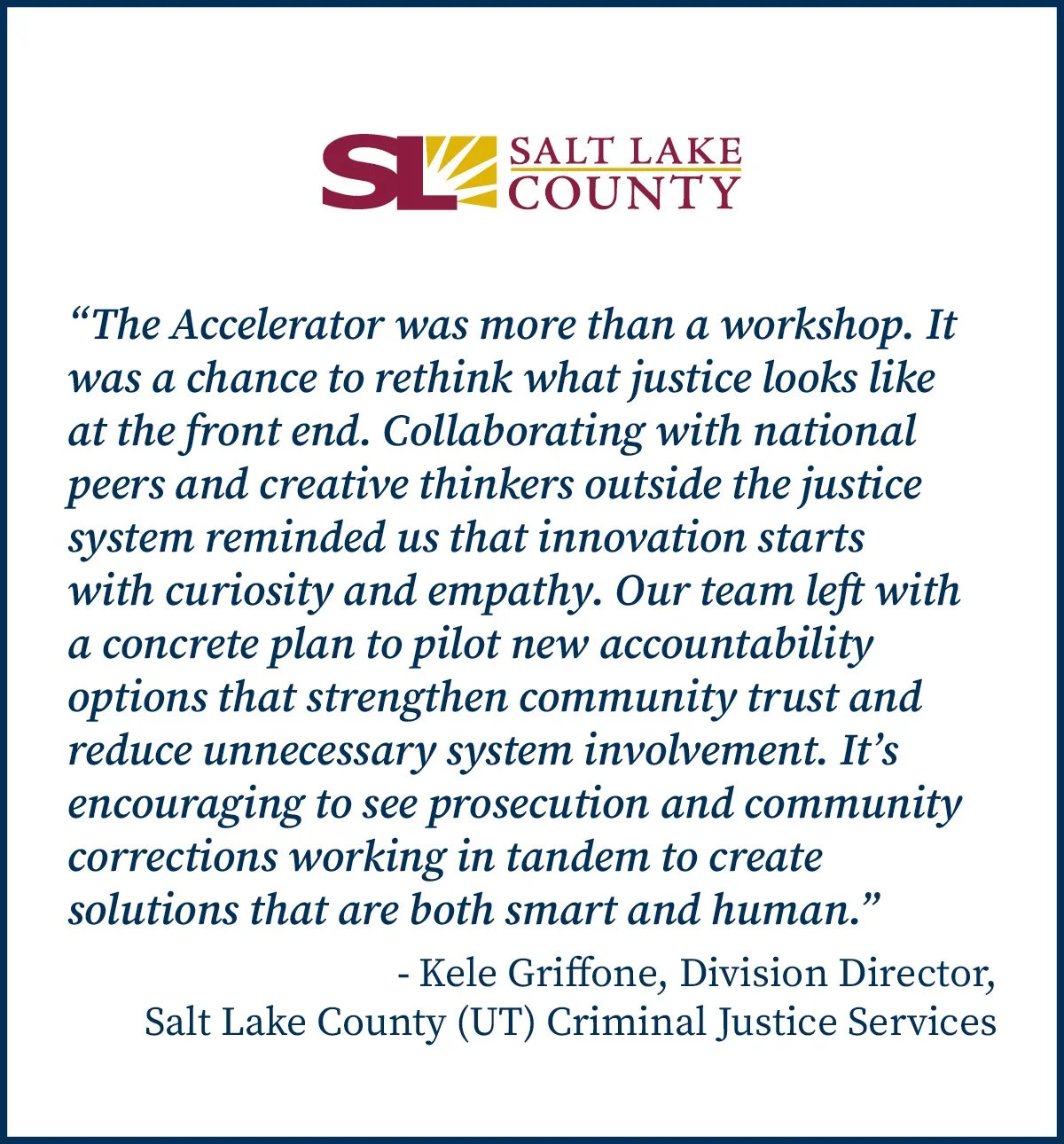
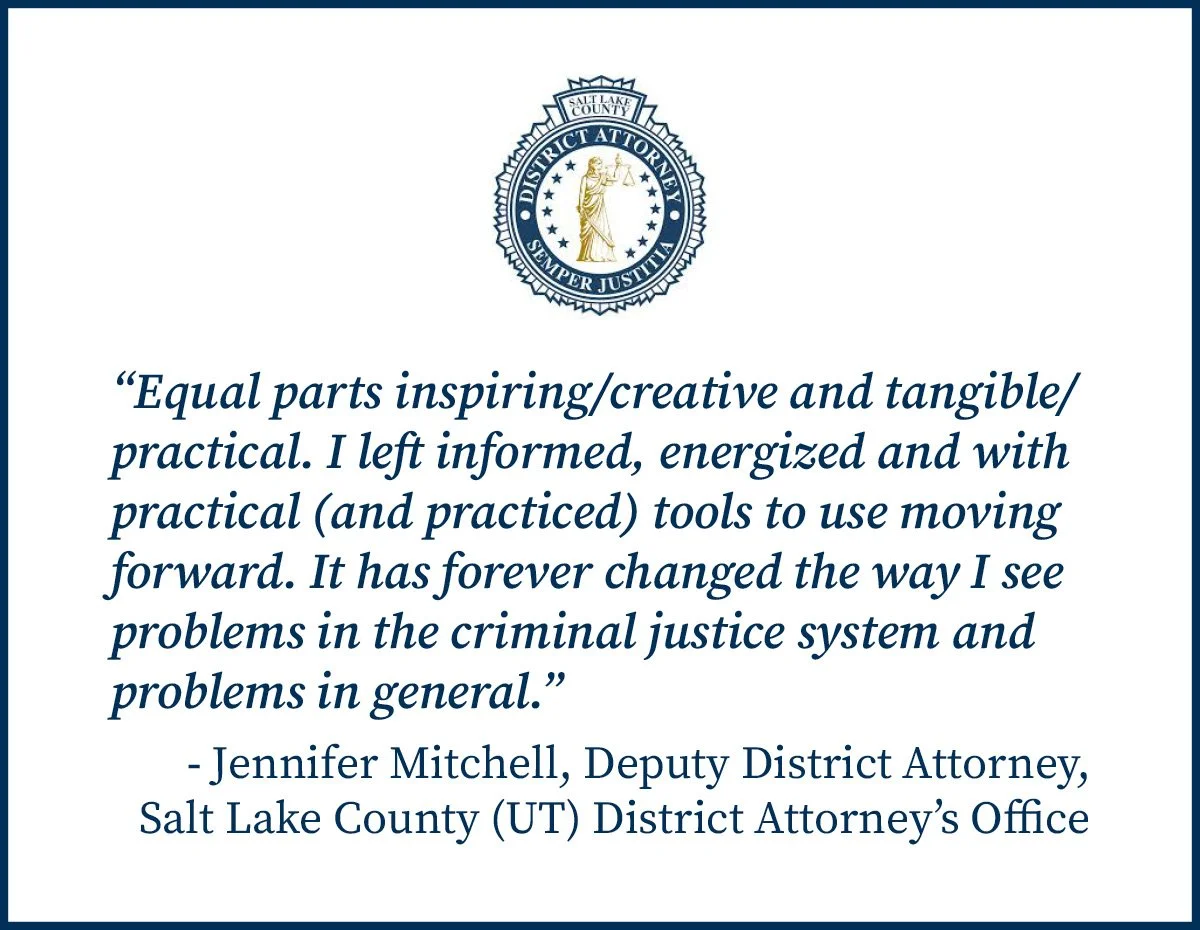
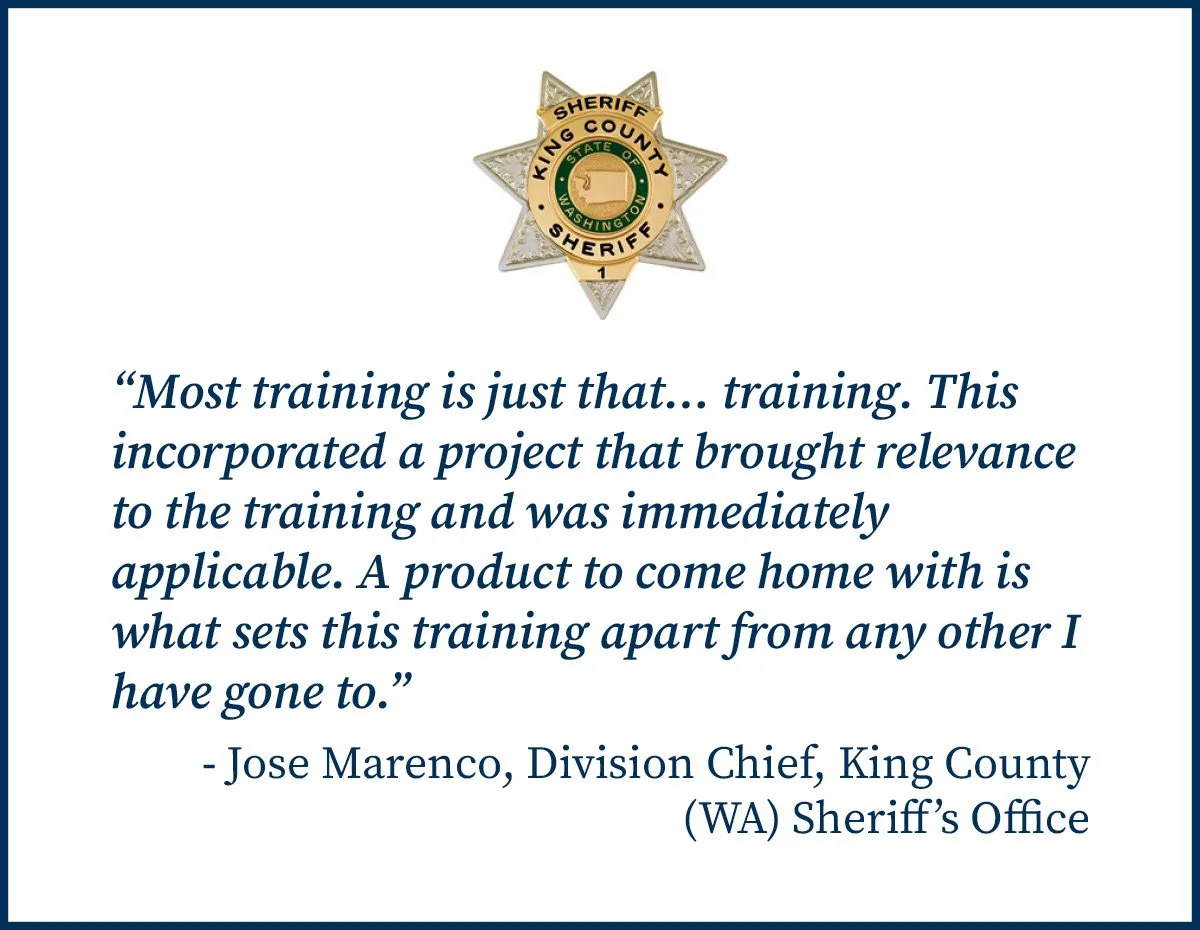
What participants are saying
Frequently Asked Questions
-
The 2026 Accelerator will be held in October at the Vanderbilt University Law School in Nashville, TN.
-
The first step is to complete an interest form, which you can find here. Those interested will then be invited to attend an upcoming webinar to learn more about the program and application process.
-
As a participant in the 2026 Accelerator, you and your team will commit to participating in 5 webinars and complete pre-work assignments between April and September; build a cross-sector team and attend the 3-day, in-person training in Nashville in October; and commit to monthly meetings after the training for ongoing support with the Accelerator organizers.
-
This 12-month experience has been designed with intentionality to make sure you and your office are supported and set up to succeed in solving one of your community’s challenges – we also want you to have fun while doing it. Our team has deep experience in the criminal justice system and have walked in your shoes. We want to provide you with a place to find clarity on the problem you are solving and then give you the tools to solve it.
-
For more information or with specific questions, please contact Jared Fishman at jared.fishman@justiceinnovationlab.org or Alissa Heydari at alissa.heydari@vanderbilt.edu.

In the news
Pine City Pioneer
October 22, 2025

October 24, 2025
Reimagining what’s possible

The Tennessean
October 21, 2025

December 12, 2025
Redesigning the Architecture of Justice

True Bill Talk
December 11, 2025